
Empowering Resilience: Hapinus Care Leads Transformative Open Forum At University Of Kerala To Combat Gender-Based Violence
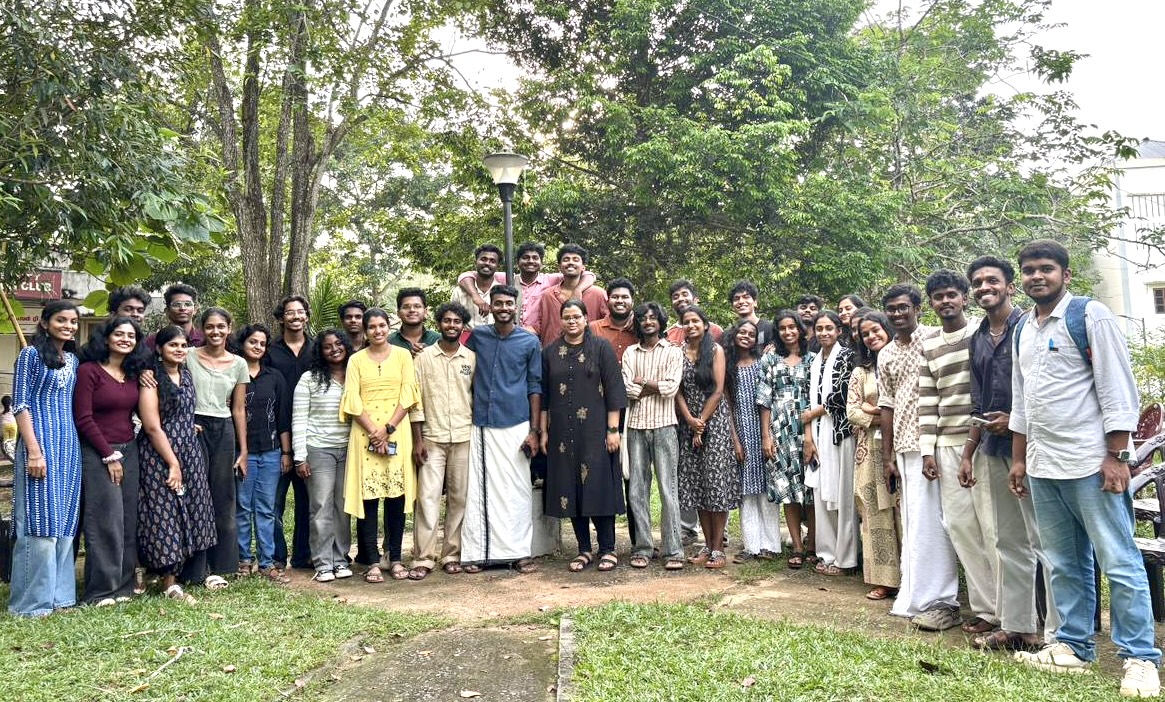
On the 25th of November, 2025, the lush green campus of the University of Kerala at Kariavattom became a haven for dialogue and healing as Hapinus Care, leading mental health organization in Kerala, organized a high-powered open forum in commemoration of the International Day for the Elimination of Violence against Women. Organized in a vibrant partnership with the Kerala University Departments Students Union, the open forum was an important platform for exploring the psychological roots of gender-based violence and the essential need for emotional well-being. The open forum was ably moderated by the visionary CEO and chief psychologist of Hapinus Care, Rajula Maniyeri, whose rich experience in both clinical work and academic discussions offered a complex yet simple framework for the discussions of the day. As a leading therapy center that fills the gap between theoretical psychology and clinical practice, Hapinus Care organized this forum to showcase its commitment to social causes and mental health awareness. The event was conceptualized to go beyond the conventional seminar, creating a platform for the academic community to interact with mental health professionals to break the silence surrounding systemic violence. With the University of Kerala chosen as the venue, Hapinus Care was able to localize the international movement, making sure that the essence of the International Day for the Elimination of Violence against Women reached the heart and mind of the next generation of thinkers and change-makers in the state.
The significance of this event cannot be emphasized enough, especially in today’s scenario where the psychological aftereffects of violence are often hidden behind the social stigma of taboos and internalized trauma. In the mental health community of Kerala, Hapinus Care has created a niche for itself as a shining example of trauma-informed care, and this open discussion was a reflection of their proactive approach towards dealing with the socio-psychological constructs that sustain gender violence. This event was not just a commemorative occasion but a deliberate intervention to pinpoint the early warning signs of domestic and societal violence from a psychological perspective. By bringing clinical perspectives to the discussion table in a public forum, Hapinus Care has demonstrated the convergence of mental health and human rights, underscoring the fact that the eradication of violence begins with the psychological empowerment of the individual. For an institution as active as this in both clinical work and academic research, such events are the only way to collect qualitative information about the mental health climate that prevails among the youth. The importance of this event was that it had the potential to communicate complex psychological ideas such as cognitive dissonance in abusive relationships and the cycle of intergenerational trauma in a way that empowered the students to challenge the status quo. It is this intersection of social activism and psychological knowledge that makes the exposure of Hapinus Care so unique, placing them not just as a clinic but as a force of change in the health sector of Kerala.
The value addition of this program for the youth was deeply apparent in the dynamic interactions of the session, where the open forum became a platform for collective catharsis and psychological development. With the expert handling of Rajula Maniyeri—a speaker known for her resonant empathy and clinical acuity—students were encouraged to share their lived experiences, views, and lingering doubts about safety and mental equity. This process of externalization is an important part of developing emotional resilience, and the students were remarkably forthcoming and brave in this regard. In addition to the verbal communication, Rajula Maniyeri introduced the participants to scientifically supported mental health interventions and grounding strategies aimed at coping with acute stress and improving self-awareness. These interventions gave the students a “psychological toolkit” to deal with the challenges of interpersonal relationships and academic pressures. The response from the student community was remarkably positive, with several students observing that the forum offered a “safe space” that is usually absent in the conventional learning environment. The analysis of the program has also identified a marked change in the attitude of the students towards therapy, which has shifted from being a last resort to a means to an end for personal and social transformation. Through the engagement of the students in such valuable interactions, Hapinus Care has been able to foster a community of self-aware and psychologically informed students who are better placed to support each other and ensure a violence-free environment.
The open forum at the University of Kerala is a definitive example of why the presence of institutions such as Hapinus Care is an absolute necessity in our modern-day society. These forums are more than just a source of information; they are an experience that helps in the long-term psychological well-being and social cohesion of society. The success of this forum highlights the need to move mental health services out of the consultation room and into the heart of society, where the seeds of change are planted. The presence of Hapinus Care in both the academic and the clinical setting ensures that their interventions are always at the cutting edge of psychological research while being deeply connected to the human aspect of suffering and healing. In a world that is moving towards a future where mental health becomes a basic human right, the importance of such forums in the destigmatization of therapy and the empowerment of the vulnerable can never be overstated. This incident has not only brought Hapinus Care into the limelight as a leader in this field but has also reaffirmed the fact that the process of healing is a collective experience. Under the leadership of people such as Rajula Maniyeri, this center is continuing to break new grounds in the mental health sector, and it is evident that with the right kind of psychological support and a platform to express ourselves, we can definitely create a society that is defined by safety, dignity, and overall well-being.