

Psychological Counseling for Festival Anxiety: 5 Proven Ways to Cope
Psychological counseling for festival anxiety is more relevant than most people realise — because festivals in Kerala are rarely as uncomplicated as they appear from the outside.
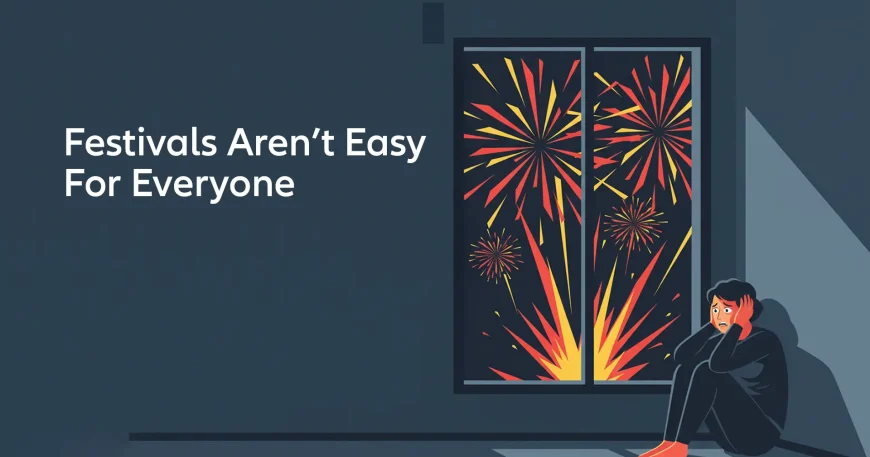
The lights go up. The houses fill with the smell of seasonal food. The atmosphere appears joyful and celebratory. And yet for many people, the internal experience of the festive season feels very different from the external one. The pressure to appear happy. The weight of family dynamics. The financial strain. The grief that intensifies when everyone around you seems to be celebrating.
At Hapinus Care, our psychological counseling team regularly supports individuals navigating this exact tension — the gap between how a festival is supposed to feel and how it actually feels. Psychological counseling for festival anxiety provides structured, compassionate support for exactly this experience.
Why Festival Anxiety Is More Common Than People Admit
What Drives Festival Anxiety
Cultural narratives describe festivals as the happiest time of the year. When your own experience does not match that narrative, the dissonance creates a specific kind of suffering — not just the anxiety itself, but the guilt and self-judgment about having it.
Research on holiday stress and psychological wellbeing confirms that festive seasons are associated with measurably increased rates of anxiety, depression, and emotional overwhelm — particularly in individuals with pre-existing mental health concerns, complicated family dynamics, or financial stress.
Psychological counseling for festival anxiety acknowledges this reality from the first session. What you are feeling during the festive season is valid, common, and treatable.
Common Triggers Addressed in Psychological Counseling for Festival Anxiety
- Social pressure to appear happy and celebratory regardless of inner experience
- Family gatherings that surface unresolved conflict or painful dynamics
- Financial stress related to gifts, travel, and social obligations
- Grief and loneliness amplified by collective celebration around you
- Disrupted sleep, dietary, and exercise routines during the holiday period
- Comparison — with others who appear to be enjoying the season more fully
5 Proven Ways Psychological Counseling for Festival Anxiety Helps
1. Psychological Counseling for Festival Anxiety Validates the Experience
The first and most important thing psychological counseling for festival anxiety offers is validation — a professional acknowledgment that what you are feeling is real, that it is not weakness or ingratitude, and that you are not alone in experiencing it.
Why Validation Matters Clinically
Many people delay seeking psychological counseling for festival anxiety because they feel they should be able to manage on their own — or because they fear their distress is not serious enough to warrant professional attention.
It is. When emotional distress is significant enough to affect your functioning, your relationships, or your ability to be present during a period that matters to you, it deserves exactly the kind of structured support that psychological counseling for festival anxiety provides.
2. Identifying Your Specific Festival Triggers
Psychological counseling for festival anxiety works best when it identifies your specific triggers rather than addressing festival stress generically. What drives anxiety for one person — family gatherings — may be irrelevant to another whose primary trigger is financial pressure or unresolved grief.
Moving From Reaction to Preparation
A skilled counselor helps you map your specific triggers clearly — so that you can prepare emotionally rather than simply react impulsively. This shift from reactive to prepared is one of the most practically powerful outcomes of psychological counseling for festival anxiety.
3. Building Practical Coping Tools for the Festive Period
Psychological counseling for festival anxiety provides practical, specific tools for managing the experiences that are most difficult for you — not generic advice, but personalised strategies for your particular triggers.
Tools Commonly Taught in Psychological Counseling for Festival Anxiety
- Boundary-setting skills — the language and emotional confidence to decline gatherings, limit hours with difficult family members, and protect your energy intentionally
- Box breathing — inhale 4 counts, hold 4, exhale 4, hold 4 — activates the parasympathetic nervous system immediately during acute social anxiety
- Grounding practices — 5-4-3-2-1 sensory technique for overwhelming moments in festive gatherings
- Cognitive restructuring — identifying and challenging the thoughts that amplify festival anxiety, such as “I should be enjoying this” or “something is wrong with me”
These tools are practical, teachable, and effective — and psychological counseling for festival anxiety is the most efficient way to develop them.
4. Addressing the Grief and Loss That Festivals Amplify
For many individuals, psychological counseling for festival anxiety is fundamentally about grief. Festivals amplify the absence of people who are no longer here. They highlight the gap between the family life you imagined and the family life you actually have. They intensify loneliness in ways that are specific to the season.
Grief Work in Psychological Counseling for Festival Anxiety
Counseling provides a safe, contained space for this grief to surface and be processed — rather than suppressed, which consistently makes festival anxiety worse. When grief is held and acknowledged in psychological counseling for festival anxiety, it does not disappear, but it becomes less overwhelming and more bearable.
5. Seeking Support Early — Before the Season Ends
The most important practical message in psychological counseling for festival anxiety is timing. Do not wait until after the season to seek support. By then, the emotional and physical cost has already accumulated.
Accessing psychological counseling for festival anxiety before or early in the festive season allows you to enter the period with practical tools, emotional preparation, and professional guidance — rather than white-knuckling your way through and recovering in January.
At Hapinus Care, our anxiety disorder team provides psychological counseling for festival anxiety across centers in Trivandrum, Kochi, Calicut, Kannur, and Kottayam, and through online sessions in English and Malayalam.
When to Seek Psychological Counseling for Festival Anxiety
Professional support is appropriate when:
- You dread the festive season weeks in advance
- Social gatherings leave you consistently emotionally exhausted or triggered
- You experience panic symptoms, intrusive thoughts, or low mood during festivals
- Grief or loneliness during the season feels unmanageable
- You feel a significant gap between how you are expected to feel and how you actually feel
- Previous festive seasons have left you emotionally depleted for weeks afterward
You do not have to manage this alone. Psychological counseling for festival anxiety is a sign of self-awareness — not weakness. And reaching out is always the right step.
No referral is needed. Call 9207 07 51 51 or book through WhatsApp.

