


Brain fog and mental exhaustion have become increasingly common among young professionals in today’s fast-paced digital world. Many individuals wake up feeling tired, struggle to focus during work, forget small things easily, and feel mentally drained even after resting. While physical exhaustion is easier to recognize, mental exhaustion often goes unnoticed until it begins affecting productivity, relationships, sleep, and emotional wellbeing.
In cities where work culture is becoming more demanding, young employees are silently facing emotional burnout, anxiety, lack of concentration, and chronic stress. Long screen hours, social media overload, multitasking, career pressure, and the constant need to stay productive are all contributing to declining mental clarity.
At Hapinus Care, psychologists and mental health professionals observe that many young adults experiencing brain fog are not “lazy” or “unmotivated.” Instead, their minds are overloaded and emotionally exhausted.
What Is Brain Fog and Why Does It Happen?
Brain fog is not a medical condition itself but a term used to describe mental fatigue, reduced concentration, forgetfulness, confusion, and difficulty thinking clearly. People experiencing brain fog often describe their mind as “slow,” “blank,” or “mentally tired.”
Young professionals today are constantly exposed to:
- Endless notifications
- Work deadlines
- Social media comparison
- Sleep disturbances
- Digital overload
- Emotional stress
- Multitasking pressure
The human brain is not designed to remain continuously stimulated without rest. When stress becomes chronic, mental performance slowly declines.
Many people continue pushing themselves despite emotional exhaustion because modern work culture often normalizes stress and burnout. Over time, this affects memory, focus, emotional regulation, and overall mental health.
How Modern Work Culture Is Affecting Young Professionals
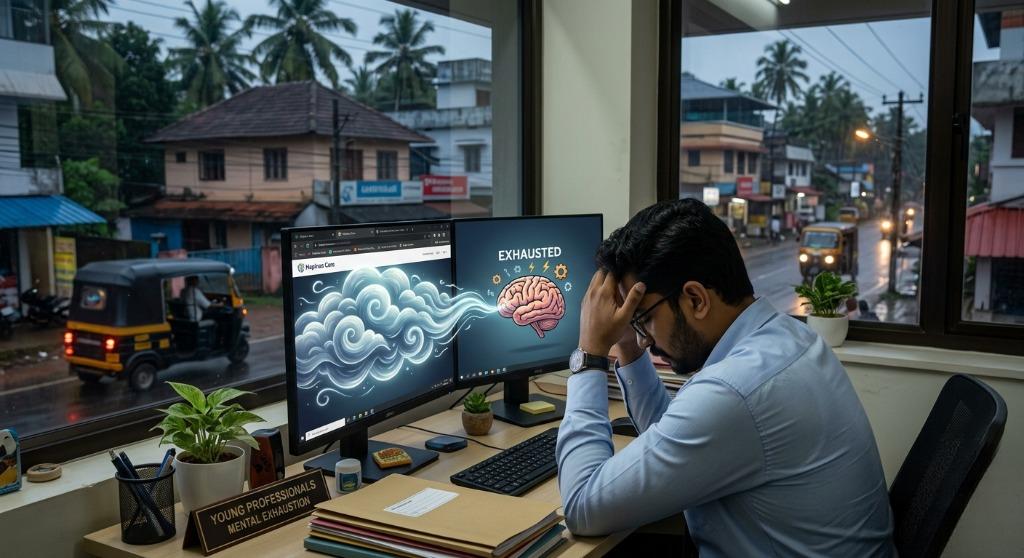
The modern workplace has changed significantly in recent years. Remote work, hybrid schedules, digital communication, and performance pressure have blurred the boundaries between personal life and work life.
Young professionals often feel they must always stay available online. Emails, WhatsApp messages, virtual meetings, and work notifications continue even after office hours. This constant mental engagement prevents the brain from fully relaxing.
In urban areas like Kochi, Thiruvananthapuram, and other growing cities, many employees silently struggle with emotional fatigue caused by demanding work environments.
Some common causes of mental exhaustion among professionals include:
- Long working hours
- Lack of sleep
- Career anxiety
- Job insecurity
- Emotional pressure
- Information overload
- Toxic productivity culture
- Constant multitasking
Over time, the brain becomes overstimulated and emotionally drained.
Signs of Mental Fatigue That People Often Ignore
Many young adults do not realize they are mentally exhausted because the symptoms appear gradually. Instead of recognizing burnout, they may assume they are becoming less productive or incapable.
Common signs of brain fog and mental exhaustion include:
Difficulty Concentrating
People may struggle to focus on simple tasks, lose track of conversations, or feel distracted easily.
Forgetfulness
Frequently forgetting appointments, passwords, tasks, or small details can indicate mental overload.
Emotional Irritability
Mental exhaustion often affects emotional regulation, causing frustration, mood swings, or emotional numbness.
Low Motivation
Even routine tasks may begin feeling emotionally exhausting or difficult to complete.
Sleep Problems
Despite feeling tired, many people struggle with overthinking at night, poor sleep quality, or waking up mentally exhausted.
Feeling “Disconnected”
Some individuals describe feeling emotionally detached, mentally slow, or unable to enjoy activities they once liked.
Ignoring these signs for long periods can increase the risk of anxiety, emotional burnout, and depression-like symptoms.
The Role of Social Media and Digital Overload
Technology has made life more connected, but it has also increased mental fatigue. The average person consumes enormous amounts of information every day through:
- YouTube
- News apps
- Emails
- Short-form videos
Constant scrolling and content consumption reduce the brain’s ability to rest and process information calmly. Many people switch rapidly between apps, conversations, videos, and tasks without giving the mind proper recovery time.
This overstimulation affects attention span and increases cognitive exhaustion.
Social media comparison also contributes to emotional stress. Young professionals often compare their careers, finances, relationships, and lifestyles with others online. This creates pressure to constantly achieve more and “keep up” with others.
The result is ongoing mental fatigue and emotional dissatisfaction.
Why Mental Health Support Matters
Many people try to ignore brain fog and emotional exhaustion, assuming they will eventually “snap out of it.” However, mental fatigue should not be normalized as a permanent part of life.
Mental health support can help individuals:
- Understand stress patterns
- Improve emotional balance
- Manage anxiety
- Develop healthier routines
- Improve focus and concentration
- Learn coping strategies for burnout
Professional counselling provides a safe space to discuss emotional struggles without judgment.
At Hapinus Care Counselling Centre, psychologists work with young professionals dealing with stress, anxiety, burnout, relationship issues, overthinking, and emotional exhaustion.
Many individuals are also choosing online counselling in Kerala because it allows them to access mental health support comfortably from home.
How to Reduce Brain Fog and Mental Exhaustion
While recovery takes time, small lifestyle and emotional changes can significantly improve mental clarity and emotional wellbeing.
Take Digital Breaks
Reducing unnecessary screen time and limiting constant notifications can help the brain relax.
Prioritize Sleep
Quality sleep is essential for cognitive recovery and emotional regulation.
Avoid Constant Multitasking
Focusing on one task at a time improves concentration and reduces mental overload.
Create Work-Life Boundaries
Avoiding work-related communication after office hours helps the mind recover emotionally.
Practice Mindfulness and Relaxation
Meditation, breathing exercises, journaling, and physical activity can help reduce stress levels.
Seek Emotional Support
Talking to trusted people or mental health professionals can reduce emotional burden and improve psychological wellbeing.
Conclusion
Brain fog and mental exhaustion are becoming increasingly common among young professionals in today’s digitally overloaded and high-pressure world. Constant stimulation, multitasking, career stress, poor sleep, and emotional burnout are silently affecting focus, productivity, and emotional health.
Mental fatigue should not be ignored or normalized. The mind needs rest just as much as the body. Recognizing the signs early and taking steps toward emotional wellbeing can prevent deeper mental health struggles in the future.
Sometimes the problem is not a lack of ability or motivation — it is simply a tired mind asking for rest, balance, and support.

