

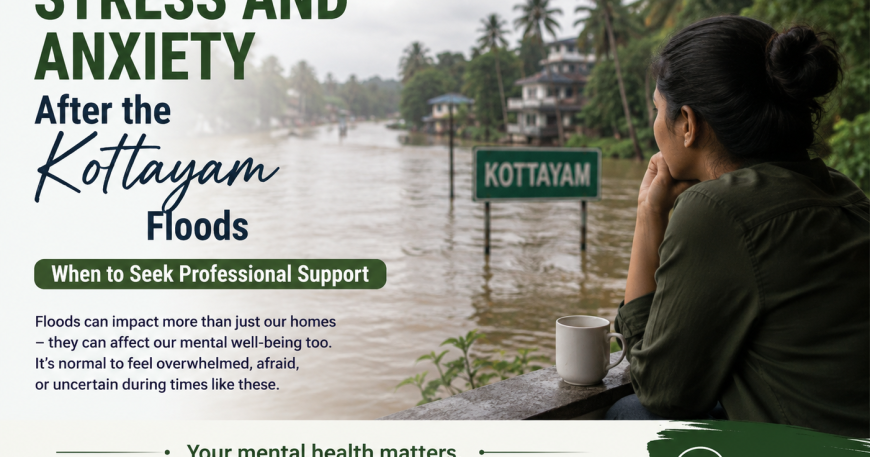
Kottayam Flood Mental Health: 5 Proven Ways to Cope After the Disaster
The recent floods in Kottayam have disrupted daily life across the district — affecting families, homes, businesses, and livelihoods. Several areas experienced severe inundation, relief camps were opened, and many residents are still in the process of rebuilding while heavy rain alerts remain in place.
While significant attention is being given to restoring infrastructure, Kottayam flood mental health is an equally important dimension of recovery — one that often gets less attention, but affects just as many people.
Experiencing a natural disaster leaves marks that are not always visible. Feeling overwhelmed, anxious, fearful, or emotionally exhausted after such an event is entirely normal. But when those feelings persist or begin to interfere with daily life, professional support can make a meaningful difference.
How the Kottayam Floods Affect Mental Health
Natural disasters affect more than physical surroundings. The psychological impact of displacement, property loss, and ongoing uncertainty is real and significant — and Kottayam flood mental health concerns are being experienced across all age groups in the district.
After a flood, people commonly experience:
- Persistent worry about the future and fear whenever rain intensifies
- Difficulty sleeping or recurring nightmares
- Irritability, mood swings, or emotional exhaustion
- Feelings of sadness, helplessness, or guilt
- Loss of motivation and difficulty concentrating
Research on disaster-related psychological distress confirms that these responses are normal reactions to abnormal events — and that early support significantly reduces the risk of long-term mental health complications.
Children may become unusually quiet, clingy, or reluctant to return to school. Older adults may experience heightened anxiety due to health or financial uncertainty. In every case, Kottayam flood mental health support is both appropriate and effective.
When Stress Becomes a Reason to Seek Professional Help
Feeling stressed after the floods is expected. What warrants professional attention is when distress becomes persistent and begins to affect daily functioning.
Signs That Professional Support Would Help
Consider speaking with a psychologist if you notice — in yourself or someone you care about — any of the following persisting for more than two weeks:
- Anxiety or panic attacks that have not reduced in intensity
- Difficulty sleeping most nights, or recurring nightmares about the floods
- Persistent sadness, hopelessness, or loss of interest in daily activities
- Withdrawal from family, friends, or community
- Constant fear that another disaster is coming
- Difficulty returning to work, school, or normal routines
Seeking support for Kottayam flood mental health is not a sign of weakness. It is a healthy step toward understanding your experience and building the coping capacity needed for genuine recovery.
5 Proven Ways to Support Your Mental Health After the Kottayam Floods
1. Re-Establish a Daily Routine
Even small, predictable routines — regular meal times, a consistent sleep schedule, light physical activity — restore a sense of stability when everything else feels uncertain. Structure is one of the most accessible and most effective tools for Kottayam flood mental health recovery.
2. Stay Connected With People You Trust
Isolation compounds distress. Talking with trusted family members, neighbours, or friends about your experience reduces the emotional weight you are carrying. Community connection is one of the most consistently protective factors in disaster recovery.
3. Set Healthy Limits on News and Social Media
Staying informed matters — but continuous exposure to distressing flood coverage or social media updates can significantly worsen anxiety. Limit consumption to specific times and rely on official sources. This is a small but clinically meaningful step for Kottayam flood mental health management.
4. Use Simple Relaxation Practices
Box breathing (inhale 4 counts, hold 4, exhale 4, hold 4), gentle stretching, mindfulness, or prayer and meditation all help regulate the nervous system and reduce the physical symptoms of anxiety. These require no equipment and can be practiced anywhere — including in a relief camp or temporary accommodation.
5. Be Patient With Yourself
Healing from a disaster is not linear. Good days and difficult days will both come. Comparing your emotional recovery to others’ is rarely helpful. Kottayam flood mental health recovery takes time — and that is not a reflection of weakness.
How Professional Counselling Helps
Professional counselling provides a safe, confidential space to process difficult emotions, understand your reactions, and develop practical coping strategies. A psychologist can help with:
- Managing persistent anxiety and excessive worry
- Processing grief over loss — of property, stability, or normalcy
- Improving sleep disrupted by stress or trauma
- Supporting children and adolescents struggling after the disaster
- Building emotional resilience for the recovery period ahead
Counselling benefits anyone finding it difficult to adjust after a significant life event — not only those with diagnosed mental health conditions.
At Hapinus Care Kottayam, our experienced psychologists provide compassionate, evidence-based support tailored to each individual’s needs. Whether you are dealing with anxiety, emotional distress, sleep difficulties, or the broader impact of the Kottayam floods on your mental health, our team is here — in person and online in English and Malayalam.
Your mental health matters. Healing begins one step at a time — and you don’t have to face it alone.
Call 9207 07 51 51 or book through WhatsApp. No referral is needed

