

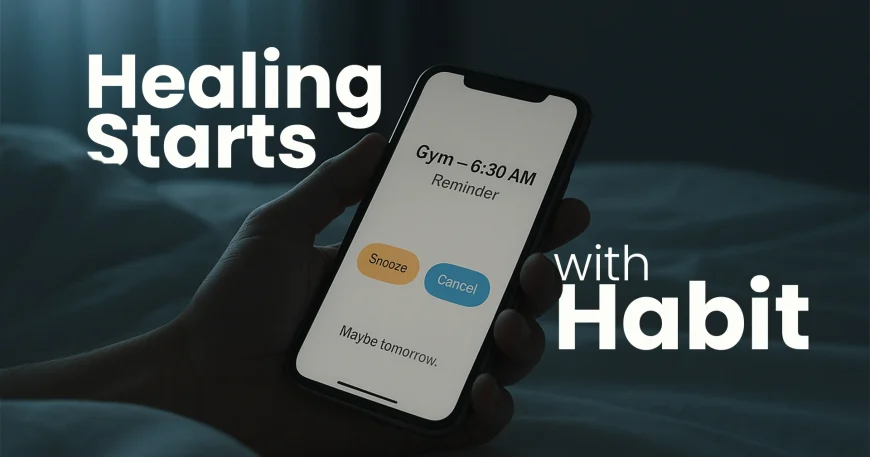
Behavioral Therapy in Kerala: 5 Proven Daily Habits That Build Mental Resilience
Behavioral therapy in Kerala highlights something that most of us already sense but rarely articulate — that mental wellbeing is not a fixed state we either have or do not have. It is something we actively shape, through the thousands of small choices that constitute daily life.
In the quiet, unspoken moments of our lives, most of us carry a weight we cannot quite name. Not the dramatic anguish of crisis, but a persistent hum of unease — a low-grade anxiety tinting our days, a fatigue that sleep does not cure, a sense of disconnection from joy we cannot entirely explain.
At Hapinus Care, our approach to behavioral therapy in Kerala is grounded in exactly this understanding: lasting mental wellbeing is a garden, tended carefully through evidence-based changes to daily routines. By reshaping habits in sleep, movement, connection, mindfulness, and boundaries, we help individuals gently steer their nervous systems from survival mode toward genuine thriving.
Why Behavioral Therapy in Kerala Focuses on Daily Habits
The Science Behind Small Changes
When considering mental health improvement, most people think of intensive therapy, life overhauls, or medication. While all of these have genuine value, behavioral therapy in Kerala also draws attention to something often overlooked — the profound psychological power embedded in daily rituals that form the architecture of ordinary life.
Research on behavioral therapy and lifestyle change consistently confirms that consistent, evidence-based modifications to daily habits produce measurable and lasting improvements in mood, anxiety, and cognitive function — often within weeks of implementation.
Behavioral therapy in Kerala builds these habits systematically, with professional guidance that ensures the changes are personalised, sustainable, and clinically appropriate for each individual.
5 Proven Daily Habits in Behavioral Therapy in Kerala
1. Behavioral Therapy in Kerala: Sleep as the Foundation of Mental Health
Sleep is perhaps the most underestimated pillar in behavioral therapy in Kerala. In a productivity-driven culture, sleep is often framed as laziness. In reality, sleep is an active, essential biological process.
What Sleep Deprivation Does to the Brain
During deep sleep, the brain clears metabolic waste, consolidates memories, and processes emotional experiences from the day. Research consistently shows that inadequate sleep impairs the prefrontal cortex’s capacity to regulate the amygdala — the brain’s threat-detection centre — resulting in heightened emotional reactivity and reduced capacity for calm.
Behavioral therapy in Kerala consistently prioritises sleep hygiene as a foundational intervention:
- Seven to nine hours of consistent sleep each night
- Regular, fixed bedtimes and wake times
- A dark, cool, screen-free bedroom environment
- A deliberate 30-minute wind-down routine before sleep
These are not indulgences. They are neurological maintenance — and among the most impactful recommendations in behavioral therapy in Kerala.
2. Behavioral Therapy in Kerala: Movement as a Neurochemical Reset
The relationship between physical movement and mental health is one of the most robustly evidenced findings in behavioral science. Exercise releases endorphins and increases Brain-Derived Neurotrophic Factor (BDNF) — a protein that supports neuronal growth, particularly in the hippocampus, a brain region critical for mood regulation and memory.
The Evidence for Even Small Amounts
Published research in JAMA Psychiatry confirms that even 15 minutes of light daily physical activity significantly reduces depression risk. Behavioral therapy in Kerala uses this evidence to encourage accessible, sustainable movement — daily walks in green spaces, morning stretching, cycling, or dancing — rather than intensive exercise regimes that are difficult to maintain.
At Hapinus Care, clinical counseling frequently incorporates movement as a behavioural prescription alongside psychological work, recognising the direct neurobiological connection between physical activity and emotional regulation.
3. Behavioral Therapy in Kerala: Journaling and Mindfulness as Internal Management Tools
While biological habits like sleep and movement address the physiological substrate of mental health, the mind’s internal narrative also requires direct attention. Behavioral therapy in Kerala addresses both dimensions.
The Therapeutic Power of Expressive Writing
Psychologist James Pennebaker’s foundational research demonstrated that expressive writing — 15 to 20 minutes over consecutive days, focused on thoughts and feelings about significant experiences — produces measurable improvements in mental and physical health. The mechanism is structural: writing externalises and organises emotions, reducing their psychological weight.
Mindfulness practice complements this by training attention to return to the present moment — repeatedly, without judgment. Even five minutes of daily breath-focused mindfulness strengthens the neural pathways responsible for emotional regulation, reducing the mind-wandering that directly sustains anxiety.
Behavioral therapy in Kerala integrates both practices — often through structured guidance in psychological counseling sessions, where therapists help clients build personalised journaling and mindfulness routines that fit their actual daily lives.
4. Behavioral Therapy in Kerala: Connection as Protection Against Loneliness
Our digital age has produced a paradox — more connectivity with less genuine connection. Loneliness is now recognised as a public health crisis, with impacts on physical and psychological health comparable to smoking.
What the Research Confirms
The 80-year Harvard Study of Adult Development — one of the longest-running studies on human wellbeing — found that the quality of close relationships is the single strongest predictor of long-term happiness and health. Positive social interactions release oxytocin, reduce cortisol, and provide the neurobiological signal of safety that the anxious nervous system most needs.
Behavioral therapy in Kerala supports this through relationship counseling, family sessions, and the cultivation of connection-building habits — device-free conversations, regular meaningful contact with valued relationships, and deliberate engagement with community.
Simple moments of genuine connection — unhurried, present, and reciprocal — activate the same neurochemical systems that behavioral therapy in Kerala works to support.
5. Behavioral Therapy in Kerala: Addressing Digital Overuse and Overcommitment
Two of the most pervasive and most clinically underaddressed threats to mental health in Kerala today are digital overuse and chronic overcommitment — and behavioral therapy in Kerala addresses both directly.
The Neurological Cost of Constant Digital Stimulation
Continuous digital stimulation — endless scrolling, streaming, and notification-checking — rewires the brain’s reward pathways, reduces attention span, and fragments the rest the nervous system needs to recover.
The Cultural Cost of Inability to Say No
In Kerala’s collectivist cultural context, declining requests and protecting personal time often feels socially unacceptable. The result is chronic overextension — emotional burnout characterised by exhaustion and detachment from work, relationships, and self.
Behavioral therapy in Kerala teaches practical boundary-setting skills — the language and emotional confidence to protect time and energy without guilt — recognising that sustainable performance in any domain requires genuine recovery.
Behavioral Therapy in Kerala at Hapinus Care
Mental health improves through small, consistent choices woven into daily life — not through dramatic overhauls that cannot be sustained.
Behavioral therapy in Kerala at Hapinus Care supports individuals in prioritising rest, movement, reflection, connection, and healthy boundaries — with professional guidance that makes these changes clinically meaningful and personally achievable.
Support is available in person across our centers in Trivandrum, Kochi, Calicut, Kannur, and Kottayam, and online in English and Malayalam.
No referral is needed. Call 9207 07 51 51 or book through WhatsApp.

