

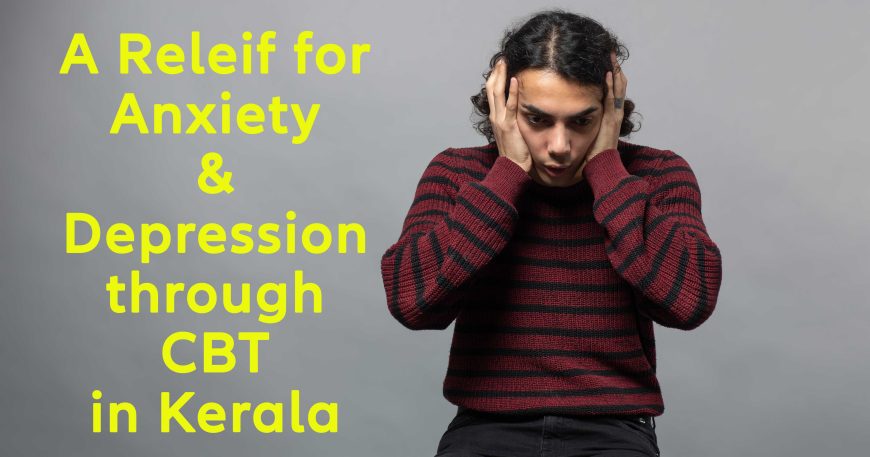
CBT in Kerala: 5 Proven Ways It Relieves Anxiety and Transforms Mental Health
CBT in Kerala is rapidly becoming one of the most sought-after mental health interventions in the state. As awareness around mental health grows across Trivandrum, Kochi, Calicut, Kannur, and Kottayam, more individuals are moving away from the idea that psychological distress must simply be endured — and turning instead toward evidence-based approaches like CBT that offer genuine, lasting relief.
At Hapinus Care, CBT is one of the primary therapeutic approaches used by our qualified psychologists for the treatment of anxiety, depression, OCD, panic disorder, social anxiety, and a range of other mental health concerns. This blog outlines what CBT actually involves and five proven ways it transforms the lives of those who engage with it.
What Is CBT in Kerala?
CBT in Kerala — Cognitive Behavioural Therapy — is a structured, evidence-based psychological treatment that focuses on the relationship between thoughts, feelings, and behaviours. The core principle of CBT is that how we think about a situation directly influences how we feel about it and how we behave in response.
Research on CBT effectiveness consistently confirms that CBT in Kerala produces outcomes equivalent to or better than medication for many anxiety disorders, and that the gains from CBT tend to be more durable — because the individual develops skills they can continue to use independently after therapy ends.
CBT is not about positive thinking. It is about accurate thinking — identifying where cognitive distortions are amplifying distress and developing a more realistic, balanced, and functional relationship with your own thoughts.
5 Proven Ways CBT in Kerala Relieves Anxiety
1. CBT in Kerala Identifies the Thoughts Driving Your Anxiety
The foundation of CBT is the identification of automatic negative thoughts — the rapid, habitual thought patterns that arise in response to triggering situations and generate anxiety before you have had time to consciously evaluate them.
Common examples encountered in CBT include catastrophising (“something terrible is about to happen”), mind-reading (“everyone thinks I am incompetent”), and all-or-nothing thinking (“if this goes wrong, everything is ruined”). These patterns feel like facts but are actually interpretations — and CBT teaches you to distinguish between the two.
2. CBT in Kerala Challenges and Restructures Unhelpful Thinking
Once automatic negative thoughts have been identified, CBT uses a process called cognitive restructuring to examine and challenge them. This is not about replacing negative thoughts with positive ones — it is about developing a more accurate, evidence-based perspective.
In CBT sessions, your therapist works with you to evaluate the evidence for and against your anxious thoughts, identify cognitive distortions, and develop more balanced and functional ways of interpreting the situations that trigger your anxiety.
3. CBT in Kerala Breaks the Avoidance Cycle
Avoidance is one of the most powerful and most counterproductive responses to anxiety. In the short term, avoiding anxiety-provoking situations provides relief. In the long term, avoidance confirms the brain’s assessment that the situation is dangerous — making the anxiety stronger and the world smaller.
CBT directly addresses avoidance through a technique called graded exposure — a structured, step-by-step process of approaching feared situations in a controlled and supported way. Over time, CBT teaches the brain that the feared situations are manageable — and anxiety naturally reduces.
4. CBT in Kerala Builds a Personal Toolkit of Coping Skills
One of the most practically valuable aspects of CBT is the development of a personalised set of coping tools that the individual can use independently. These include:
- Breathing and grounding techniques for acute anxiety management
- Thought records for identifying and challenging cognitive distortions
- Behavioural experiments for testing anxious predictions against reality
- Problem-solving frameworks for situations that generate genuine difficulty
- Relapse prevention plans for managing future episodes
CBT is explicitly skills-based — the goal is to give individuals the tools to be their own therapist after treatment ends.
5. CBT in Kerala Produces Lasting, Measurable Results
Unlike approaches that provide temporary relief without addressing underlying patterns, CBT produces durable change by modifying the cognitive and behavioural processes that sustain anxiety. The skills developed in CBT do not disappear when therapy ends — they become part of how the individual thinks and responds.
Research consistently shows that individuals who complete a course of CBT for anxiety maintain their gains at one-year and two-year follow-up — making CBT one of the most cost-effective long-term mental health investments available.
What to Expect from CBT in Kerala at Hapinus Care
CBT at Hapinus Care is delivered by qualified psychologists trained in evidence-based CBT protocols. Sessions are structured, collaborative, and goal-directed — typically running for 50 to 60 minutes, with most CBT programs consisting of 8 to 20 sessions depending on the presenting concern.
CBT is available both in person across our centers in Trivandrum, Kochi, Calicut, Kannur, and Kottayam, and online in English and Malayalam — making CBT accessible to individuals across the state and beyond.
No referral is needed. Call 9207 07 51 51 or book through WhatsApp to begin your CBT journey at Hapinus Care.

