

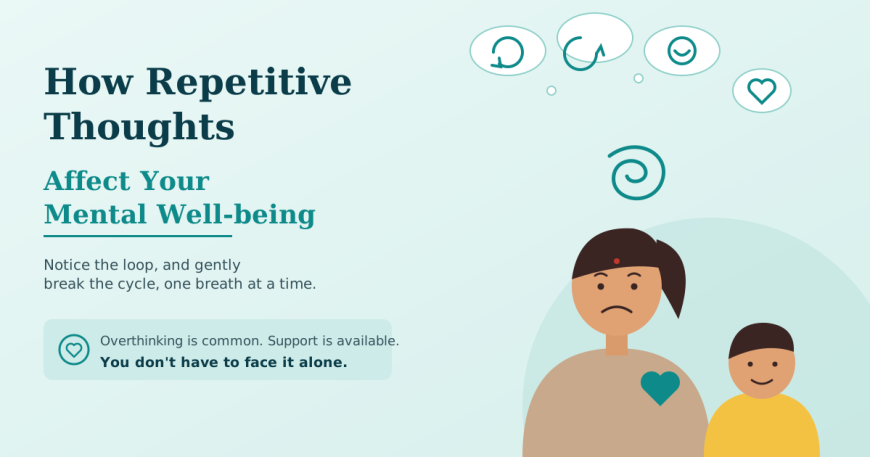
Have you ever found yourself thinking about the same situation again and again, even when you know there is nothing more you can do about it? You might replay a conversation, worry about a decision, remember an uncomfortable experience, or imagine different outcomes of a situation that has not even happened yet.
Sometimes, these thoughts continue even when you are busy with work, spending time with family, or trying to relax. What begins as an ordinary thought can slowly turn into a repeated thinking pattern that becomes difficult to control.
This is commonly associated with rumination, a pattern in which individuals repeatedly focus on negative experiences, worries, or emotions without reaching a meaningful solution. While occasional overthinking is normal, persistent repetitive thoughts can affect mental well-being, emotional balance, and everyday functioning.
Why Do We Experience Repetitive Thoughts?
Repetitive thoughts can occur for different reasons. Sometimes, the mind tries to understand an uncomfortable experience or find an answer to an unresolved problem. However, when a person continues analysing the same situation without finding a way forward, it can become an unhealthy thinking pattern.
Some common reasons include:
Past experiences: Unpleasant memories, relationship conflicts, personal failures, and embarrassing situations can stay in our minds for a long time. People may repeatedly revisit these experiences, wondering what they could have done differently.
Fear of the future: Uncertainty about career, relationships, finances, and personal responsibilities can lead to repeated worrying. People may imagine different negative outcomes and mentally prepare for situations that may never happen.
Anxiety and emotional stress: Individuals experiencing anxiety may find it difficult to stop analysing situations. Even small everyday problems can trigger continuous questioning and worrying.
Perfectionism: People who expect everything to be perfect may repeatedly question their decisions and actions. They may struggle to accept mistakes or situations that are beyond their control.
Unresolved emotions: Feelings such as anger, guilt, sadness, disappointment, and fear can contribute to repetitive thinking, particularly when individuals find it difficult to express or process these emotions.
How Do Repetitive Thoughts Affect Mental Well-being?
When the mind continuously focuses on the same thoughts, it can become emotionally exhausting. Over time, this pattern may influence different aspects of mental health.
1. Increased Anxiety and Worry
Repeatedly thinking about possible problems can increase feelings of uncertainty and fear. A person may start worrying about things that have not happened, imagining the worst possible outcomes.
For example, someone waiting for an important work-related decision may continuously think about losing their job, disappointing their family, or facing financial difficulties.
This constant mental activity can make it difficult to feel relaxed, even when there is no immediate problem.
2. Emotional Exhaustion
Thinking continuously about the same situation can be mentally tiring. Even after completing everyday responsibilities, a person may feel emotionally drained because their mind has not had enough time to rest.
They may become irritated easily, lose interest in activities, or feel overwhelmed by small challenges.
3. Sleep Disturbances
Repetitive thoughts often become more noticeable when people are trying to sleep. Without everyday distractions, the mind may start revisiting past conversations, worrying about upcoming responsibilities, or questioning previous decisions.
This can make it difficult to fall asleep or maintain a healthy sleep routine. Poor sleep can then contribute to increased stress and difficulty managing emotions the following day.
4. Difficulty Concentrating
When a person’s attention is constantly occupied by repetitive thoughts, concentrating on other activities becomes challenging.
They may find it difficult to complete work, follow conversations, remember important details, or remain focused while studying.
This can affect productivity and create additional stress, especially when responsibilities begin to accumulate.
5. Low Self-confidence and Negative Self-talk
Repetitive negative thinking can influence the way individuals see themselves.
Someone who repeatedly remembers their mistakes may begin believing that they are not capable, successful, or good enough. They might compare themselves with others and focus more on their weaknesses than their achievements.
Over time, this can affect self-esteem and confidence in making decisions.
6. Strained Personal Relationships
Overthinking can also affect relationships. A person may repeatedly analyse someone’s words, misunderstand small interactions, or assume that others are upset with them.
They may seek constant reassurance, avoid difficult conversations, or become emotionally withdrawn.
When these patterns continue, they can create unnecessary misunderstandings and emotional distance between people.
Repetitive Thoughts, Anxiety, and Depression: Understanding the Connection
Repetitive negative thinking is associated with several mental health concerns, particularly anxiety and depression.
People experiencing anxiety may repeatedly worry about future situations, possible mistakes, or things they cannot control. Their minds may constantly search for potential problems, making it difficult to feel secure.
In depression, repetitive thinking may involve past disappointments, guilt, feelings of worthlessness, or negative beliefs about oneself. Individuals may spend considerable time thinking about what went wrong or why they feel unhappy.
However, repetitive thoughts alone do not mean someone has anxiety or depression. The frequency, intensity, duration, and impact of these thoughts are important when understanding an individual’s mental health.
If these patterns become persistent or interfere with everyday life, professional assessment can help identify the underlying concerns.
How to Manage Repetitive Thoughts in Everyday Life
It may not be possible to prevent every negative thought from entering your mind. However, you can learn to change how you respond to these thoughts.
Here are some practical ways to manage repetitive thinking:
1. Identify your thought patterns
Pay attention to the situations that trigger repetitive thoughts. Is it a particular conversation, a past experience, work-related stress, or uncertainty about the future?
Understanding these triggers can help you recognise when your mind is entering an unhelpful thinking cycle.
2. Separate problems from assumptions
Sometimes, we spend too much time worrying about situations based on assumptions rather than facts.
When a negative thought appears, ask yourself whether it is based on something that has actually happened or something you are imagining.
3. Practise mindfulness
Mindfulness encourages you to pay attention to the present moment without judging your thoughts or emotions.
Simple activities such as mindful breathing, meditation, and walking can help you redirect your attention when repetitive thinking becomes overwhelming.
4. Express your emotions
Keeping difficult emotions to yourself can sometimes make them harder to process. Talking to someone you trust or writing down your feelings can help you understand what is troubling you.
5. Make time for activities you enjoy
Engaging in hobbies, physical activities, creative interests, and social interactions can provide a healthy break from repetitive thinking.
6. Be kinder to yourself
Avoid judging yourself for having negative thoughts. Everyone experiences uncertainty, mistakes, and difficult emotions.
Instead of repeatedly blaming yourself, practise self-compassion and remind yourself that one experience does not define your entire life.
Can Professional Counselling Help With Repetitive Thinking?
When repetitive thoughts become difficult to manage, professional mental health support can help individuals understand and address these patterns.
A psychologist can help identify the triggers, emotional experiences, and beliefs contributing to repetitive thinking.
Cognitive Behavioural Therapy (CBT) is one therapeutic approach that can help individuals recognise unhelpful thought patterns, challenge negative assumptions, and develop healthier ways of responding to stressful situations.
Depending on an individual’s needs, therapy may also focus on emotional regulation, mindfulness, stress management, and developing practical coping strategies.
Seeking counselling does not mean that someone is unable to handle their problems. It is an opportunity to understand personal challenges with professional guidance and work towards better emotional well-being.
Give Your Mind the Space to Rest
Repetitive thoughts can make it difficult to enjoy the present moment. You may spend hours thinking about something that happened yesterday or worrying about something that might happen tomorrow.
But your thoughts do not always reflect reality, and you do not have to find an answer to every question that crosses your mind.
Learning to recognise repetitive thinking, process difficult emotions, and develop healthier coping habits can make a meaningful difference to your mental well-being.
If constant worrying or negative thoughts are affecting your sleep, relationships, work, or everyday happiness, consider seeking support from a mental health professional.
Hapinus Care offers psychological support and counselling to help individuals understand their emotional challenges and work towards better mental well-being. Reaching out for support can be a positive first step towards a healthier relationship with your thoughts and emotions.
