

Mental Health Daily Habits: 5 Powerful Ways to Make Mental Health a Priority Every Day
Mental health daily habits are the single most underinvested area of personal wellbeing in Kerala today. We rush to the doctor when our body hurts. We book dental checkups before our teeth ache. We monitor our diet and exercise routines with genuine consistency. But when it comes to our minds, most people wait — until the anxiety becomes overwhelming, until the depression makes getting out of bed impossible, until a crisis forces them to act.
At Hapinus Care, our psychological counseling team sees this pattern repeatedly. People arrive having endured months — sometimes years — of escalating distress that could have been significantly reduced by simple, consistent mental health practised earlier.
This blog outlines five powerful mental health habits that make genuine, sustainable wellbeing possible — without waiting for a crisis to make you pay attention.
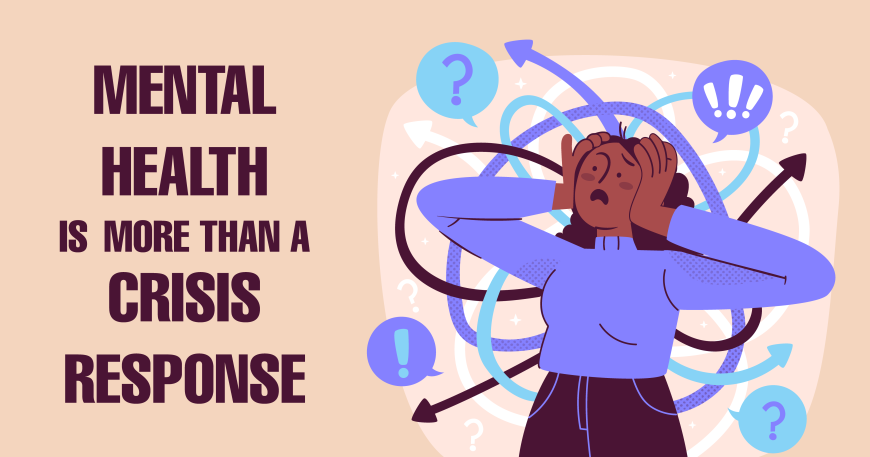
Why Mental Health Daily Habits Matter More Than Crisis Response
The reactive model of mental health — seek help only when things break down — is both ineffective and costly. Research from the World Health Organization confirms that prevention and early intervention in mental health produce significantly better outcomes than treatment after acute deterioration.
Mental health habits shift the model from reactive to proactive. They build the psychological resilience, emotional regulation capacity, and self-awareness that make crisis less likely — and recovery faster when difficulty does arise.
Mental health habits are not complex or time-consuming. They are small, consistent practices that compound over time into genuine psychological strength.
5 Powerful Mental Health Daily Habits to Build Starting Today
1. Mental Health Daily Habits: Check In With Yourself Every Morning
The first and most foundational of all mental health habits is a brief daily self-check-in. Before the demands of the day take over, take two to three minutes to notice how you actually feel — not how you are supposed to feel, not how you felt yesterday, but how you feel right now.
This mental health daily habit builds self-awareness — the capacity to notice your own emotional state before it escalates. Many people operate in a state of chronic emotional disconnection, unaware of accumulating stress or low mood until it reaches a point of crisis. A daily check-in interrupts this pattern at the source.
You do not need a journal or a structured format. Simply pausing and honestly asking “how am I today?” — and actually waiting for an honest answer — is one of the most powerful mental health habits you can build.
2. Mental Health Daily Habits: Protect Your Sleep as a Non-Negotiable
Sleep is not a passive recovery state — it is an active neurological process during which the brain consolidates memories, regulates emotional responses, and repairs the physiological damage of the day’s stresses. Mental health habits that protect sleep are among the highest-leverage investments you can make in your psychological wellbeing.
Practical mental health daily habits around sleep include:
- Maintaining a consistent sleep and wake time — even on weekends
- Stopping screen exposure at least 30 minutes before bed
- Avoiding caffeine after 2pm
- Creating a brief wind-down routine that signals to the nervous system that the demanding part of the day is complete
These mental health habits around sleep directly reduce anxiety, improve emotional regulation, and significantly enhance cognitive function throughout the following day.
3. Mental Health Daily Habits: Move Your Body Every Day
Physical movement is one of the most evidence-based mental health habits available. Exercise reduces cortisol, increases endorphins, improves sleep architecture, and directly supports the neuroplasticity that underlies emotional resilience and cognitive function.
Mental health daily habits around movement do not require a gym membership or a structured workout plan. A 20-minute walk — particularly outdoors — is one of the most effective mental health daily habits for mood regulation and stress reduction. The consistency matters far more than the intensity.
4. Mental Health Daily Habits: Limit Inputs That Generate Anxiety
Mental health daily habits are not only about what you add to your day — they are also about what you reduce. In Kerala today, one of the most anxiety-generating inputs is the constant stream of news, social media content, and digital stimulation that most people absorb without filtering.
Developing mental health daily habits around media consumption — checking news at designated times rather than continuously, setting social media time limits, avoiding screens first thing in the morning — reduces baseline anxiety and creates space for the mind to process and recover rather than continuously react.
5. Mental Health Daily Habits: Invest in One Genuine Human Connection Each Day
Isolation is one of the most significant risk factors for mental health deterioration. Mental health daily habits that prioritise genuine human connection — a real conversation, not a WhatsApp message — are powerfully protective.
This does not require large social events or significant time investment. Mental health daily habits around connection can be as simple as having one genuine, unhurried conversation with a person you care about each day — with full presence and without digital distraction.
When Mental Health Daily Habits Are Not Enough
Mental health daily habits are powerful preventive tools — but they are not substitutes for professional support when genuine mental health difficulties are present.
If you notice that consistent practice of mental health daily habits is not alleviating persistent low mood, anxiety, or distress — or if your functioning in work, relationships, or daily life is significantly impaired — it is time to speak with a qualified psychologist.
At Hapinus Care, our team supports individuals across Trivandrum, Kochi, Calicut, Kannur, and Kottayam in building sustainable mental health daily habits — alongside evidence-based treatment for anxiety, depression, and other mental health concerns. Online counseling in English and Malayalam is also available.
Call 9207 07 51 51 or book through WhatsApp. Your mental health deserves daily attention — not just crisis management.

