

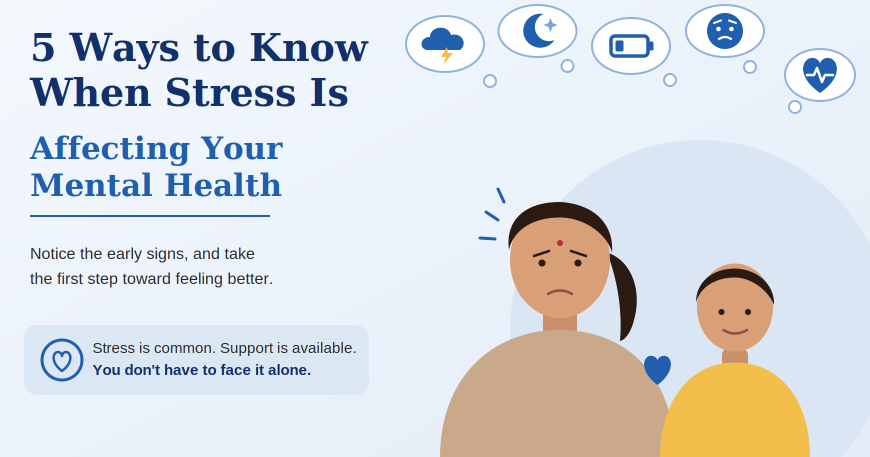
Stress is a normal part of life. Work pressure, relationship concerns, financial worries, family responsibilities, and everyday challenges can all make us feel stressed from time to time. A little stress may help us stay focused and motivated, but when stress continues for a long time, it can begin to affect our mental and emotional well-being.
Sometimes, we become so used to feeling stressed that we may not immediately realise how much it is affecting us. Changes in sleep, mood, concentration, or even the way we interact with others can be signs that our mind needs attention.
Here are five signs that stress may be affecting your mental health.
1. You Feel Tired Even After Rest
Constant stress can leave you feeling mentally and physically exhausted. You may wake up feeling tired even after getting enough sleep, or find that ordinary daily activities require more effort than usual.
You might also feel like you have very little energy to socialise, work, exercise, or do things you normally enjoy.
If tiredness continues for a long time, it is worth paying attention to what may be contributing to it, including ongoing stress and emotional exhaustion.
2. You Are More Irritable or Emotional
Have you noticed yourself becoming irritated over small things? Do you find yourself getting angry, frustrated, worried, or emotional more easily than before?
Long-term stress can affect how we respond to everyday situations. You may have less patience with family members, colleagues, or friends, even when they have not done anything particularly wrong.
Frequent mood changes or feeling emotionally overwhelmed can be a sign that your mind is struggling to cope with continued pressure.
3. You Find It Difficult to Sleep or Concentrate
Stress can make it difficult for the mind to switch off.
You may lie in bed thinking about work, responsibilities, conversations, or future problems. This can make it harder to fall asleep or stay asleep.
Stress can also affect concentration during the day. You may find yourself forgetting things, struggling to complete simple tasks, or reading the same information repeatedly without absorbing it.
When stress begins affecting both your sleep and concentration, it may be time to take a closer look at your mental well-being.
4. You Stop Enjoying Things You Used to Like
One important sign that stress is affecting your mental health is losing interest in activities that once made you happy.
You may stop meeting friends, avoid hobbies, spend more time alone, or feel that nothing seems enjoyable anymore. Even when you have free time, you may not feel motivated to do anything.
Everyone needs rest, and occasionally wanting to be alone is completely normal. However, if withdrawal and loss of interest continue for a prolonged period, talking to a mental health professional can help you understand what you are experiencing.
5. You Feel Like You Are Constantly Overwhelmed
Sometimes stress feels less like one specific problem and more like a constant feeling that everything is too much.
You may feel unable to manage your responsibilities, constantly worry about what could go wrong, or feel that you are falling behind no matter how much you do.
When your mind is constantly occupied with worries and you find it difficult to relax, stress may be taking a greater toll on your mental health than you realise.
What Can You Do When Stress Starts Affecting You?
Recognising stress is the first step. You do not always have to wait until you feel completely overwhelmed before seeking support.
Small changes such as getting adequate sleep, maintaining a routine, taking breaks, staying physically active, spending time with supportive people, and making time for activities you enjoy can help you manage everyday stress.
However, if stress is persistent or begins affecting your sleep, relationships, work, mood, or everyday life, speaking with a psychologist can provide the right support.
A psychologist can help you understand the factors contributing to your stress and develop healthier ways of coping with difficult emotions and situations.
When Should You Seek Professional Help?
Stress becomes a concern when it starts interfering with your ability to live your everyday life.
Consider reaching out to a mental health professional if you:
- Feel overwhelmed most of the time
- Have ongoing sleep difficulties
- Struggle to concentrate or complete daily tasks
- Experience frequent anxiety, irritability, or emotional distress
- Lose interest in activities you once enjoyed
- Find it difficult to manage your responsibilities or relationships
You do not need to wait until your stress becomes severe to ask for help. Seeking support early can make it easier to understand what you are going through and find healthy ways to manage it.
Take Your Mental Health Seriously
Stress may be a normal part of life, but living with constant stress should not be considered something you simply have to tolerate.
Pay attention to changes in your mood, sleep, energy, concentration, and interest in everyday activities. These changes can tell you when your mind may need a little more care and attention.
If stress is affecting your daily life, Hapinus Care can help you connect with mental health professionals who can listen to your concerns and support you through the challenges you are experiencing.
Taking care of your mental health is not a sign of weakness. Sometimes, asking for support is an important step towards feeling better and living a healthier, more balanced life.

