

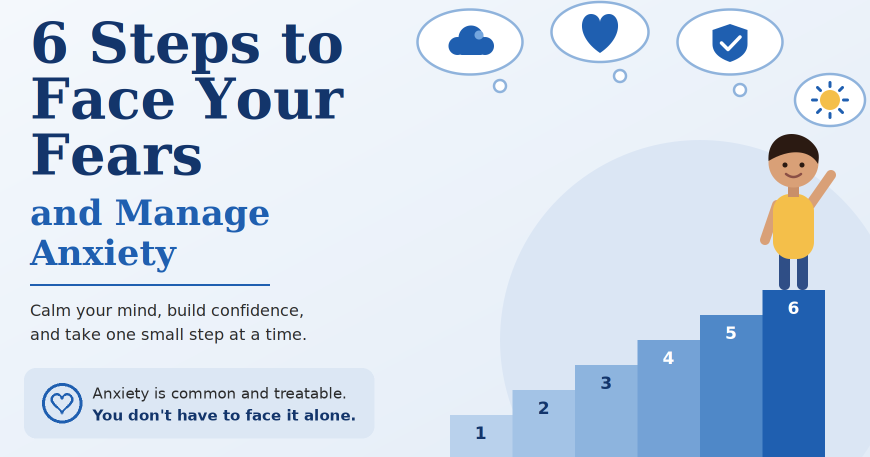
Fear and anxiety are natural responses to situations that make us feel uncertain, uncomfortable, or unsafe. Whether it is speaking in front of others, attending an important meeting, travelling alone, or dealing with difficult conversations, fear can sometimes stop us from doing things that matter to us.
An eye on the fear and managing anxiety can be overwhelming; avoiding the situation may feel like the easiest solution. Although avoidance can bring temporary relief, it may also make the fear feel stronger over time. Gradually learning to face uncomfortable situations can help us build confidence and manage anxiety more effectively.
The goal is not to eliminate fear completely but to learn how to respond to it without allowing it to control our everyday lives.
1. Understand What Triggers Your Fear
The first step towards managing anxiety is understanding what triggers it. Different situations affect people in different ways. Some may feel anxious in social settings, while others may worry about making mistakes, being judged, or losing control.
Pay attention to the situations that make you uncomfortable and the thoughts that arise during those moments. For example, someone who fears public speaking may worry about forgetting their words or embarrassing themselves in front of others.
Recognising these thoughts can help you understand the connection between your fears, emotions, and behaviour. Instead of judging yourself for feeling anxious, approach your feelings with curiosity and patience.
2. Stop Expecting Yourself to Overcome Fear Overnight
Facing your fears does not mean forcing yourself into the most uncomfortable situation immediately. Trying to do too much too soon can feel overwhelming and may make it harder to continue.
Instead, give yourself permission to progress gradually. If speaking in a group makes you anxious, you might begin by sharing your thoughts with a trusted friend before participating in a larger discussion.
Small, manageable steps can help you develop confidence over time. Remember that progress does not always happen in a straight line. Some days may feel easier than others, and that is a normal part of learning to manage anxiety.
3. Challenge Anxious Thoughts With Realistic Thinking
Anxiety often makes us imagine the worst possible outcome. A small mistake may feel like a disaster, or an uncertain situation may seem more dangerous than it really is.
When anxious thoughts appear, pause and ask yourself a few questions. What evidence supports this thought? Am I assuming the worst will happen? Is there another way to understand this situation?
For example, if you are worried about attending a social gathering, you may think that everyone will judge you. However, you cannot know what everyone is thinking, and many people may be focused on their own conversations.
Replacing extreme assumptions with more balanced thoughts can help you approach situations with greater clarity. The aim is not to force yourself to think positively but to consider the situation realistically.
4. Practise Gradual Exposure to Your Fears
Avoiding feared situations can provide immediate relief, but it may prevent you from discovering that you can handle them. Gradual exposure involves approaching a feared situation in small, manageable steps rather than avoiding it completely.
For instance, someone who feels anxious about travelling alone might start with a short trip to a familiar place before gradually attempting longer journeys.
Repeatedly approaching a situation in a safe and manageable way can help you learn that anxiety is something you can cope with. You may still feel nervous, but the experience can become less intimidating over time.
It is important to move at a manageable pace and avoid putting yourself in genuinely dangerous situations. If your anxiety is severe or significantly affects daily life, a psychologist can help you develop an appropriate plan.
5. Learn Healthy Ways to Calm Your Body
Anxiety issues does not affect only your thoughts. It can also cause physical symptoms such as a racing heart, muscle tension, sweating, restlessness, or changes in breathing.
Learning to respond to these sensations can help you feel more prepared when anxiety arises. Slow, comfortable breathing, relaxing tense muscles, and bringing your attention back to the present moment may help reduce distress.
Maintaining regular sleep, physical activity, balanced meals, and time for relaxation can also support your overall emotional well-being.
Remember that the goal is not to make every anxious feeling disappear before you act. You can learn to take small steps towards your goals even when some nervousness remains.
6. Seek Professional Support When Anxiety Becomes Difficult to Manage
Sometimes, anxiety persists despite your best efforts. You may find yourself avoiding everyday activities, struggling at work or college, withdrawing from relationships, or worrying so much that it affects your quality of life.
In these situations, speaking with a qualified mental health professional can be helpful. A psychologist can help you understand your anxiety triggers, identify unhelpful thinking patterns, and develop practical coping strategies. Approaches such as cognitive behavioural therapy (CBT) and professionally guided exposure techniques may be useful for certain anxiety-related difficulties.
Seeking help does not mean you are weak or incapable of managing your emotions. It means you are taking steps to understand yourself and find support that suits your needs.
At Hapinus Care, individuals can seek psychological support to better understand their emotional challenges and explore suitable ways to manage them. Finding a psychologist with whom you feel comfortable discussing your concerns can make the process of seeking help easier.
Learning to face your fears is a gradual process that requires patience, practice, and self-compassion. Understanding your triggers, challenging anxious thoughts, approaching feared situations gradually, and developing healthy coping strategies can help you respond to anxiety more effectively.
You do not need to wait until you feel completely fearless before taking the next step. Sometimes, progress begins with doing one small thing that fear has been holding you back from doing.
If anxiety is interfering with your daily life, consider reaching out to Hapinus Care to explore professional psychological support. With the right guidance and consistent effort, it is possible to build confidence and develop a healthier relationship with fear.
